Fruit Tree Fertilization: From Planting to Peak Production
Growing fruit trees is a rewarding journey that culminates in bountiful harvests of delicious, homegrown fruit. However, the path from planting a young sapling to harvesting peak production requires strategic fertilization tailored to each growth stage. Whether you're establishing a new orchard or working to rejuvenate mature trees, understanding the fundamentals of fruit tree nutrition can significantly impact your success.
Many fruit tree growers make the mistake of applying a one-size-fits-all approach to fertilization, not realizing that nutritional needs change dramatically as trees mature and transition through different life stages. This comprehensive guide will walk you through stage-specific fertilization strategies, helping you provide the right nutrients at the right time to optimize growth, fruit production, and overall tree health.
Table of Contents
- Understanding Fruit Tree Nutritional Needs
- Establishment Phase: First 1-3 Years
- Early Production Phase: Years 3-5
- Peak Production Phase: Years 5+
- Timing Your Fertilization Schedule
- Soil Management and Testing
- Organic Fertilization Options
- Application Methods and Techniques
- Troubleshooting Common Issues
- Conclusion: Putting It All Together
Understanding Fruit Tree Nutritional Needs
Before diving into specific fertilization strategies, it's essential to understand the fundamental nutritional requirements of fruit trees and how they impact growth and development.
Primary Nutrients (NPK)
The three macronutrients—nitrogen (N), phosphorus (P), and potassium (K)—each play vital roles in fruit tree health:
- Nitrogen (N): Drives vegetative growth, including leaves and new shoots. It's critical for photosynthesis and overall tree vigor. However, excessive nitrogen can promote excessive vegetative growth at the expense of fruit production and increase susceptibility to certain diseases.
- Phosphorus (P): Supports root development, flowering, and energy transfer within the tree. It's particularly important during establishment and flowering phases.
- Potassium (K): Enhances fruit quality, disease resistance, and cold hardiness. Potassium is crucial for fruit ripening, sugar development, and overall tree health during production years.
Secondary Nutrients and Micronutrients
In addition to NPK, fruit trees require several secondary nutrients and micronutrients, including:
- Calcium (Ca): Essential for cell wall development and fruit quality. Calcium deficiency can lead to bitter pit in apples and other storage disorders.
- Magnesium (Mg): A key component of chlorophyll and enzyme activator. Deficiency often shows as interveinal chlorosis on older leaves.
- Boron (B): Critical for flower development, pollination, and fruit set. Many fruit trees, particularly apples and pears, are sensitive to boron deficiency.
- Zinc (Zn): Important for hormone production and internode elongation. Deficiency causes "little leaf" symptoms and poor fruit set.
- Iron (Fe): Required for chlorophyll production. Deficiency causes distinctive yellowing of young leaves while veins remain green.
Nutrient Requirements by Fruit Type
While all fruit trees share basic nutritional needs, specific requirements can vary by type:
- Pome Fruits (Apples, Pears): Moderate nitrogen needs, high demand for potassium and calcium for fruit quality, and often require boron supplementation.
- Stone Fruits (Peaches, Plums, Cherries): Higher nitrogen requirements than pome fruits, especially during early growth phases, and generally need more consistent fertilization.
- Citrus: Require more frequent applications of nitrogen and micronutrients, particularly iron, manganese, and zinc in alkaline soils.
- Nut Trees: Generally need higher levels of zinc and boron, with moderate nitrogen requirements.
Pro Tip: Rather than focusing solely on individual nutrients, aim for a holistic approach to soil fertility that supports overall soil biology. Healthy soil biology improves nutrient availability and uptake, enhancing the efficiency of any fertilization program.
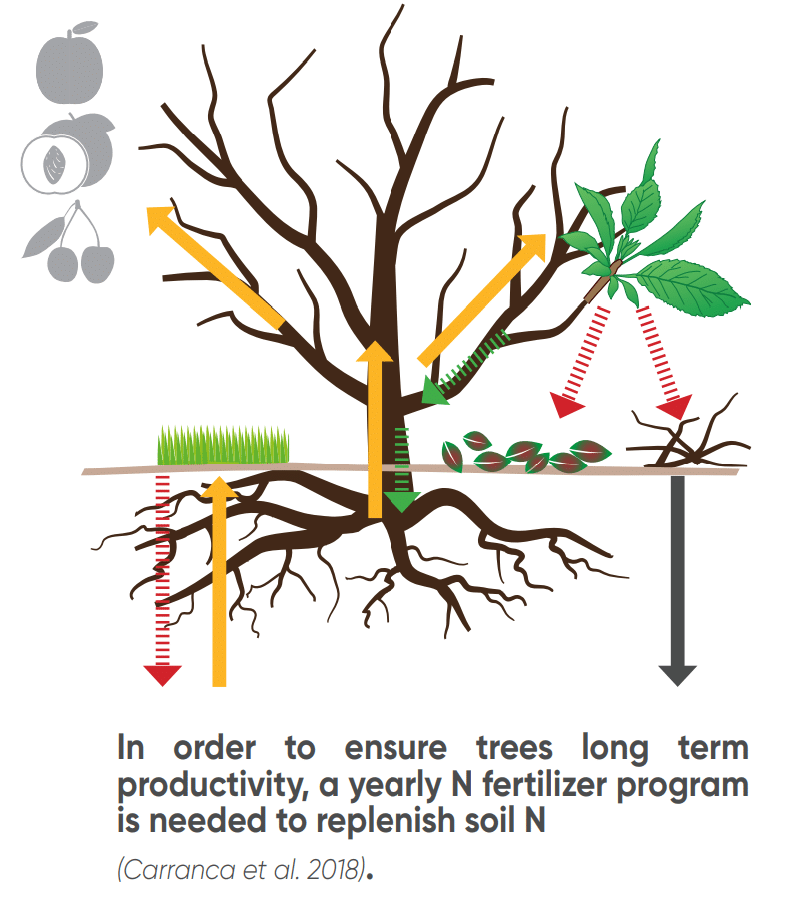
Fruit tree growth cycle showing critical stages for nutrient application
Establishment Phase: First 1-3 Years
The first few years after planting are critical for developing a strong root system and framework that will support future fruit production. Fertilization during this phase should focus on supporting healthy root and structural development rather than pushing fruit production.
Pre-Planting Soil Preparation
Proper soil preparation before planting sets the foundation for long-term tree health:
- Soil Testing: Always begin with a comprehensive soil test to determine existing nutrient levels, pH, and organic matter content.
- pH Adjustment: Most fruit trees prefer a slightly acidic soil pH between 6.0-6.8. Apply lime to raise pH or sulfur to lower it, as indicated by soil test results.
- Organic Matter: Incorporate 2-4 inches of compost or well-rotted manure into the planting area (not just the planting hole) to improve soil structure and fertility.
- Avoid Planting Hole Fertilization: Contrary to popular belief, adding fertilizer directly to the planting hole can damage sensitive young roots. Instead, focus on overall soil improvement across the planting area.
First-Year Fertilization Strategy
During the critical first growing season, a cautious approach to fertilization works best:
- Timing: Wait until 4-6 weeks after planting before applying any fertilizer, allowing roots to establish without fertilizer burn risk.
- Rate: Apply approximately 1 oz (28g) of actual nitrogen per year of tree age, with a maximum of 1 lb (454g) of 10-10-10 or similar balanced fertilizer in the first year.
- Application Method: Distribute fertilizer in a ring starting 6 inches from the trunk and extending slightly beyond the drip line, then water thoroughly.
- Split Applications: For best results, divide the total annual fertilizer amount into 2-3 applications from spring through early summer, avoiding late summer feeding that could stimulate vulnerable new growth before winter.
Years 2-3: Building the Foundation
As young trees develop, fertilization should gradually increase to support expanding root systems and structural growth:
- Nitrogen Focus: Young, non-bearing trees benefit from slightly higher nitrogen ratios (such as 12-6-6 or 16-4-8) to promote strong vegetative growth.
- Rate Calculation: A common guideline is to apply 0.1 lbs of actual nitrogen per inch of trunk diameter measured 12 inches above the ground.
- Monitoring Growth: Adjust fertilization based on annual shoot growth. Ideally, young trees should produce 18-24 inches of new growth annually. Less than 12 inches suggests increased fertilization is needed; more than 30 inches indicates reduction is appropriate.
- Micronutrient Attention: Address any specific micronutrient deficiencies identified through leaf tissue analysis or visible symptoms, particularly zinc, iron, or boron which are common limiting factors for young trees.
Important: Avoid fertilizing after mid-summer (typically late July in the Northern Hemisphere). Late-season growth stimulated by fertilizer may not harden off before winter, making trees susceptible to cold damage.
Early Production Phase: Years 3-5
During this transitional period, trees begin producing their first significant crops while still putting energy into structural growth. Fertilization strategies must balance support for both fruit production and continued tree development.
Shifting Nutrient Focus
As trees transition to fruit bearing, nutrient priorities should adjust accordingly:
- Decreasing Nitrogen Emphasis: Gradually shift from high-nitrogen formulations to more balanced NPK ratios (such as 10-10-10 or 12-12-12) to avoid excessive vegetative growth that competes with fruit production.
- Increasing Potassium: As fruiting begins, potassium becomes increasingly important for fruit quality and overall tree health. Consider supplemental potassium applications (such as potassium sulfate) for trees producing their first significant crops.
- Calcium Support: Begin focusing on calcium nutrition through applications of gypsum or calcium nitrate, particularly for apple varieties prone to calcium-related disorders like bitter pit.

Properly applying organic matter around a young fruit tree's drip line
Adjusting Rates Based on Production
During early bearing years, fertilization rates must be fine-tuned based on both tree growth and crop load:
- Growth Indicators: Trees in early production should maintain 12-18 inches of new terminal growth annually. Adjust fertilization up or down to maintain this target range.
- Crop Load Considerations: Trees with heavy fruit set require additional nutrients compared to those with lighter crops. Consider supplemental fertilization following heavy bloom or fruit set.
- Split Applications: Continue with multiple applications, with approximately 50-60% of the annual fertilizer applied in early spring before bud break and the remainder applied after fruit set.
- Post-Harvest Boost: A light application of balanced fertilizer within 2-3 weeks after harvest helps trees rebuild reserves and prepare flower buds for the following season without stimulating late-season growth.
Special Considerations for Different Fruit Types
Different fruit species may require specialized approaches during this phase:
- Apples and Pears: Focus on calcium and potassium for fruit quality. Consider foliar calcium sprays during fruit development in addition to soil applications.
- Stone Fruits: Higher nitrogen requirements continue during early bearing years, but excess can reduce fruit quality and increase disease susceptibility. Monitor and adjust based on growth and fruiting patterns.
- Figs and Persimmons: Generally require less fertilization than other fruit types. Excessive feeding can reduce fruit quality and cold hardiness.
- Citrus: Benefit from more frequent, lighter applications throughout the growing season rather than concentrated seasonal applications.
Early Production Tip: When trees produce their first significant crops, they often need additional support to balance fruit production with continued growth. Consider a slight increase in fertilization during the first 1-2 heavy bearing years to prevent stunting or alternate bearing patterns from developing.
Peak Production Phase: Years 5+
Mature, fully productive fruit trees have different nutritional requirements than young or establishing trees. At this stage, fertilization should focus on sustaining production, fruit quality, and tree health rather than promoting significant new growth.
Maintenance Fertilization Strategy
For established, productive trees, the fertilization approach shifts to maintenance mode:
- Balanced Nutrition: Fully productive trees generally benefit from balanced NPK ratios (such as 10-10-10) or formulations with slightly higher potassium levels (such as 9-12-12) to support fruit quality and tree health.
- Rate Moderation: Standard recommendation is approximately 0.1 lb of actual nitrogen per inch of trunk diameter or 1 lb of 10% nitrogen fertilizer per year of tree age, up to a maximum of 8-10 lbs for large mature trees.
- Coverage Area: Fertilizer should be applied from near the trunk (about 12 inches away) to 1-2 feet beyond the drip line, where the majority of active feeder roots are located.
- Annual Adjustments: Base fertilization intensity on the previous year's crop load, growth, and general tree vigor. Trees that produced heavy crops or show signs of reduced vigor may need increased fertilization.
Supporting Heavy Crop Loads
Mature trees in full production need targeted support to maintain consistent annual bearing:
- Split Applications: Divide annual fertilization into 2-3 applications with the first application before bud break, a second application after fruit set, and potentially a light post-harvest application.
- Foliar Supplements: Consider supplemental foliar sprays of micronutrients during the growing season, particularly calcium, zinc, and boron which directly impact fruit quality and set.
- Customized Blends: Based on soil tests and leaf analysis, consider custom fertilizer blends that address specific orchard deficiencies rather than relying solely on standard formulations.
- Multi-Year Perspective: Some nutrients, particularly phosphorus and potassium, can be applied less frequently at higher rates (every 2-3 years) if soil tests show adequate levels, while nitrogen typically requires annual application.
Rejuvenation of Aging Trees
Older trees may show declining vigor and production, requiring specialized fertilization approaches:
- Vigor Assessment: For aging trees showing reduced growth and production, consider a one-time application of higher nitrogen fertilizer (such as 16-4-8) in early spring to stimulate renewed vigor.
- Root Zone Improvement: Apply organic matter as a top dressing around the drip line, potentially combined with vertical mulching (drilling holes and filling with compost) to improve root environment for older trees.
- Pruning Coordination: Synchronize rejuvenation pruning with increased fertilization to stimulate balanced renewal growth in older trees.
- Extended Application Zone: For mature trees, expand the fertilization zone significantly beyond the drip line, as feeder roots of established trees extend 1.5-2 times the branch spread.
Mature Tree Strategy: For trees in full production, prioritize consistent, moderate fertilization over intensive feeding. Over-fertilization of mature fruit trees often reduces fruit quality, decreases storage life, and can lead to increased disease and pest susceptibility without significantly improving yield.
Timing Your Fertilization Schedule
The timing of fertilizer applications is just as important as the type and amount applied. Strategic timing ensures nutrients are available when trees need them most while minimizing waste and potential negative impacts.
Seasonal Timing Considerations
Different seasons call for different fertilization approaches:
- Early Spring (Before Bud Break): The primary application window for most fruit trees. Apply 50-70% of the annual fertilizer amount 2-4 weeks before expected bud break when roots are active but before significant growth begins.
- Late Spring/Early Summer: After fruit set, apply the second fertilizer application (if using split applications) to support fruit development. This is typically 4-6 weeks after the first application.
- Summer: Generally avoid fertilizing during mid-to-late summer (after late June/early July in Northern Hemisphere) to prevent stimulating vulnerable new growth that won't harden off before winter.
- Post-Harvest: A light application within 2-3 weeks after harvest helps trees build reserves for the following season's growth and bloom. Skip this application if harvest occurs in late fall when trees are preparing for dormancy.
- Winter: Apply any needed soil amendments like lime or sulfur during the dormant season to allow time for these materials to affect soil pH before the growing season begins.
Climate-Specific Adjustments
Regional climate variations require timing adjustments:
- Cold Climates: In regions with harsh winters, cease all fertilization by mid-summer to ensure trees properly harden off before cold weather.
- Warm Climates: In mild-winter regions, fertilization can extend later into the growing season, with some subtropical fruit trees benefiting from light year-round fertilization.
- Arid Regions: In dry climates, coordinate fertilization with irrigation cycles to ensure nutrients dissolve and reach the root zone effectively.
- Rainy Regions: In high-rainfall areas, time applications to avoid periods of excessive precipitation that could wash away nutrients before absorption.
Growth Stage Timing
Beyond calendar timing, synchronizing fertilization with tree growth stages improves effectiveness:
- Pre-Bloom: Apply phosphorus and micronutrients critical for flowering and fruit set 3-4 weeks before expected bloom.
- Post-Fruit Set: Apply nitrogen and potassium after fruits have set to support cell division and early fruit development.
- Fruit Development: Focus on calcium and potassium during fruit sizing stages, particularly for fruits prone to calcium-related disorders.
- Post-Harvest Recovery: Support root growth and energy storage with balanced nutrition after harvest but before dormancy.
- Dormant Applications: Reserve soil amendments and slow-release organic materials for the dormant period to allow time for breakdown and integration.
Timing Tip: For most deciduous fruit trees, the 4-6 week period just after bud break is when nutrient uptake is most efficient. Prioritize this window for major nutrient applications when trees can best utilize them for productive growth.
Soil Management and Testing
Effective fertilization begins with understanding and optimizing your soil conditions. Regular testing and proper soil management create the foundation for tree health and productivity.
Soil Testing Protocol
Implement a systematic approach to soil assessment:
- Initial Assessment: Before planting, conduct a comprehensive soil test to determine baseline pH, nutrient levels, organic matter content, and potential issues like compaction or drainage problems.
- Regular Monitoring: Retest soil every 2-3 years for established orchards to track changes and adjust management practices accordingly.
- Sampling Technique: Take multiple samples (8-12 cores) from throughout the root zone at a depth of 6-8 inches, avoiding areas with recent fertilizer applications or excessive organic matter.
- Specialized Testing: Consider additional tests for micronutrients, soil biology, or contaminants if tree performance suggests issues not covered by standard tests.
- Lab Selection: Use regional soil testing laboratories familiar with fruit production for the most relevant recommendations.
pH Management
Soil pH dramatically influences nutrient availability and should be carefully maintained:
- Optimal Range: Most fruit trees perform best in slightly acidic soil with pH between 6.0 and 6.8. Stone fruits typically prefer the lower end of this range, while pome fruits adapt to slightly higher pH.
- Acidification: For alkaline soils, apply elemental sulfur, aluminum sulfate, or acidifying organic materials like pine needles or coffee grounds. Major pH adjustments should be made gradually over several seasons.
- Raising pH: For acidic soils, incorporate agricultural lime (calcium carbonate) or dolomitic lime (for soils also needing magnesium). Apply in fall for maximum effectiveness before the next growing season.
- Maintenance: Once established in the optimal range, monitor pH every 2-3 years and make smaller corrective applications as needed rather than major adjustments.
Building Soil Health Beyond NPK
Comprehensive soil management extends beyond basic fertility:
- Organic Matter Management: Maintain or increase soil organic matter through annual applications of compost, mulch, or cover cropping. Aim for 3-5% organic matter content for optimal fruit tree performance.
- Soil Biology: Support diverse soil microbial communities through minimal tillage, organic inputs, and avoiding excessive synthetic fertilizer applications that can disrupt soil ecology.
- Mycorrhizal Relationships: Preserve and enhance beneficial fungal associations by avoiding fungicides that impact soil fungi and considering mycorrhizal inoculants for new plantings.
- Physical Structure: Address compaction through careful management of equipment traffic, strategic subsoiling when necessary, and incorporation of organic materials to improve aggregation.
- Water Management: Install proper drainage where needed and maintain consistent soil moisture to optimize nutrient availability and root function.
Tissue Testing Complement
Leaf tissue analysis provides insight beyond what soil tests can reveal:
- Sampling Protocol: Collect mid-season leaves (typically July-August for deciduous fruit) from the middle portion of current season's growth, selecting healthy leaves from non-fruiting spurs or shoots.
- Frequency: Conduct tissue tests annually for commercial operations or every 2-3 years for home orchards to identify emerging deficiencies before visible symptoms appear.
- Interpretation: Compare results to established standards for your specific fruit species and varieties, recognizing that optimal levels vary significantly between different fruits.
- Integration: Use tissue test results alongside soil tests to develop a complete picture of your orchard's nutritional status and requirements.
Soil Management Caution: Avoid the temptation to "fix" soil issues quickly with high rates of amendments. Dramatic changes to soil chemistry can shock trees and create new problems. Instead, make incremental improvements over multiple seasons while closely monitoring tree response.
Organic Fertilization Options
Organic approaches to fruit tree fertilization focus on building soil health while providing balanced nutrition. These methods often work more slowly than synthetic alternatives but create more resilient, self-sustaining systems over time.
Compost and Manure Applications
These foundation materials provide slow-release nutrition and improve soil structure:
- Finished Compost: Apply 1-2 inches annually around the drip line, providing a balanced array of nutrients and supporting soil biology. An average application rate is 1/2 to 1 cubic yard per mature tree.
- Aged Manure: Apply well-aged manure (at least 6 months old) at approximately 5-10 pounds per inch of trunk diameter. Fresh manure can burn roots and introduce pathogens.
- Application Timing: Apply in late fall or early spring, keeping material several inches away from the trunk to prevent collar rot and rodent damage.
- Source Considerations: Different compost sources provide varying nutrient profiles—poultry manure is higher in nitrogen and phosphorus; horse manure with bedding provides more balanced nutrition with good organic matter.
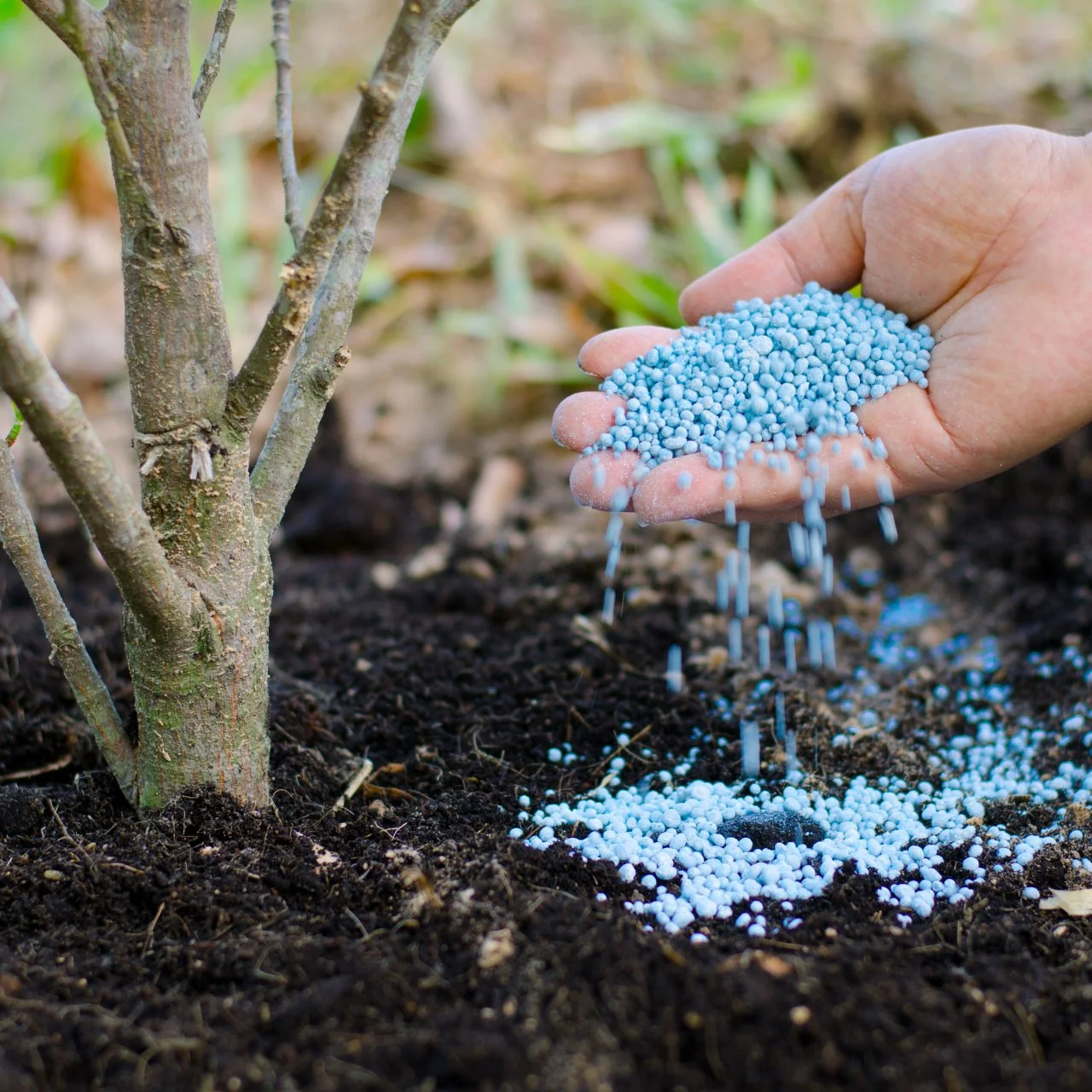
Proper organic mulching technique creating a nutrient-rich environment for fruit trees
Specialized Organic Amendments
Target specific nutritional needs with specialized organic products:
- Blood Meal: High in nitrogen (12-0-0), excellent for young trees or those showing nitrogen deficiency. Apply at approximately 1 pound per inch of trunk diameter.
- Bone Meal: Rich in phosphorus (0-12-0) and calcium, supports flowering, fruiting, and root development. Apply at 2-3 pounds per mature tree in early spring.
- Greensand: Provides potassium (0-0-3) and trace minerals while improving soil structure. Apply at 5-10 pounds per 100 square feet.
- Kelp Meal: Supplies potassium, trace minerals, and natural growth hormones that enhance stress resistance. Use as a soil amendment (1-2 pounds per tree) or foliar spray.
- Alfalfa Meal: Provides balanced NPK (2-1-2) with triacontanol, a natural growth stimulant. Apply 2-5 pounds per mature tree.
- Rock Phosphate: Long-lasting phosphorus source that works best in acidic soils. Apply 2-3 pounds per 100 square feet every 3-4 years.
Liquid Organic Fertilizers
For faster-acting nutrition or foliar applications:
- Compost Tea: Brew by steeping finished compost in water for 24-48 hours, then strain and apply as a soil drench or foliar spray. Provides beneficial microbes along with soluble nutrients.
- Fish Emulsion: Fast-acting nitrogen source (typically 5-1-1) that can be applied as a soil drench around the drip line or as a foliar spray. Dilute according to package directions, typically 1 tablespoon per gallon.
- Seaweed Extract: Rich in micronutrients and natural growth regulators, excellent as a foliar spray during critical growth stages. Apply every 2-3 weeks during active growth.
- Worm Castings Tea: Gentle, balanced nutrition with beneficial microorganisms. Brew 1 cup of castings per gallon of water for 24 hours, then strain and apply.
Cover Cropping and Living Mulches
Use strategic plantings to build soil fertility:
- Nitrogen-Fixing Cover Crops: Plant legumes like clover, vetch, or field peas in orchard alleys or under tree canopies (maintaining a clear area around trunks). These can contribute 50-150 pounds of nitrogen per acre annually.
- Dynamic Accumulators: Incorporate plants like comfrey and yarrow that mine nutrients from deep soil layers, making them available when biomass is cut and used as mulch.
- Management Strategy: Mow or cut cover crops at flowering stage and leave as surface mulch or lightly incorporate into soil. For maximum nitrogen benefit from legumes, incorporate before seed formation.
- Compatibility Considerations: Select low-growing varieties under tree canopies to minimize competition, and ensure adequate irrigation if using cover crops in dry regions.
Organic Transition Tip: When converting from conventional to organic management, expect a 1-3 year transition period during which trees adjust to slower-release nutrition. During this time, use more frequent applications of fast-acting organic options like fish emulsion or alfalfa tea to bridge the gap while building long-term soil fertility.
Application Methods and Techniques
How you apply fertilizer can significantly impact its effectiveness and the tree's response. Proper application techniques ensure nutrients reach the active root zone while minimizing waste and environmental impact.
Broadcast Application
The most common method for home orchards and many commercial operations:
- Coverage Area: Apply fertilizer evenly from 6-12 inches away from the trunk (depending on tree age) to 1-2 feet beyond the drip line where most active feeder roots grow.
- Application Pattern: For granular fertilizers, distribute evenly throughout the root zone rather than concentrating in bands or piles.
- Incorporation: Lightly rake granular fertilizers into the top 1-2 inches of soil when possible, or apply before anticipated rainfall to help dissolve and carry nutrients into the soil.
- Water Activation: After application, irrigate thoroughly (1-2 inches of water) to dissolve fertilizer and move nutrients into the root zone.
Drill-Hole Method
An effective technique for established trees, especially in compacted soils:
- Hole Pattern: Using a soil auger or digging bar, create 8-12 inch deep holes in a grid pattern throughout the root zone, starting 2 feet from the trunk and extending 2 feet beyond the drip line.
- Spacing: Space holes approximately 2 feet apart, creating 10-20 holes for an average-sized mature fruit tree.
- Application: Divide the total fertilizer amount among the holes, filling them about half full with a mixture of compost and granular fertilizer.
- Completion: Backfill holes with soil and water thoroughly to settle materials and initiate nutrient movement.
Liquid Fertigation
Integrating fertilization with irrigation systems for efficient delivery:
- Injection Systems: Use fertilizer injectors or proportioners to add water-soluble fertilizers to irrigation water at appropriate concentrations.
- Concentration: Follow manufacturer guidelines for dilution rates, typically maintaining electrical conductivity (EC) below 2.0 mS/cm to avoid root damage.
- Frequency: Apply smaller amounts more frequently rather than infrequent high-concentration applications. Weekly or bi-weekly applications during active growth are often ideal.
- Post-Application: Run clean water through the irrigation system after fertigation to rinse foliage and irrigation components.
Foliar Feeding
Direct application to leaves for targeted nutrition and quick response:
- Ideal Uses: Best for micronutrients (especially iron, zinc, boron) and for addressing acute deficiencies requiring rapid response. Not efficient for meeting major NPK requirements.
- Timing: Apply early morning or evening when stomata are open and temperatures are moderate. Avoid application during hot, sunny conditions.
- Coverage: Use fine spray to cover leaf undersides where most stomata are located. Add a few drops of mild dish soap as a surfactant to improve adherence.
- Concentration: Use more dilute solutions than recommended for soil application—typically ¼ to ½ strength to avoid leaf burn.
- Frequency: Apply every 2-4 weeks during active growth periods or as needed based on visual symptoms.
Deep Root Feeding
Targeted delivery to deep root zones for mature trees:
- Equipment: Use a deep root feeder attachment for a garden hose or a specialized injection tool that delivers fertilizer solution 6-12 inches below the soil surface.
- Pattern: Insert at multiple points in a grid pattern throughout the root zone, staying at least 3 feet from the trunk on mature trees.
- Solution: Use liquid or water-soluble fertilizer mixed according to manufacturer directions for deep root feeding (typically more dilute than surface applications).
- Pressure: Apply using moderate pressure to avoid soil disruption while ensuring proper distribution.
Application Caution: Never apply fertilizer directly against the trunk or within the first 6-12 inches from the base of the tree. This can cause collar rot, fertilizer burn on trunk tissue, and encourage rodent damage. Always maintain a fertilizer-free zone immediately around the trunk.
Troubleshooting Common Issues
Even with careful planning, fruit trees may develop nutrient-related problems. Learning to recognize and address these issues promptly is key to maintaining tree health and productivity.
Identifying Nutrient Deficiencies
Visual symptoms often provide clues to specific deficiencies:
| Nutrient | Visual Symptoms | Correction Strategy |
|---|---|---|
| Nitrogen (N) | Uniform yellowing of older leaves; stunted growth; small, pale leaves; reduced fruit size | Apply quick-release nitrogen source like blood meal or calcium nitrate; follow with balanced fertilizer |
| Phosphorus (P) | Purplish color on leaves and stems; poor flowering; stunted root systems; delayed maturity | Apply bone meal or rock phosphate; check soil pH as phosphorus availability decreases in very acidic or alkaline soils |
| Potassium (K) | Marginal scorching on older leaves; weak stems; poor fruit color; reduced cold hardiness | Apply potassium sulfate, greensand, or wood ash; address soil compaction which restricts potassium uptake |
| Calcium (Ca) | Bitter pit in apples; tip burn in leaves; poor fruit storage quality; blossom end rot in stone fruits | Apply gypsum or lime (depending on soil pH); use foliar calcium sprays during fruit development |
| Iron (Fe) | Interveinal chlorosis on young leaves while veins remain green; occurs most often in alkaline soils | Apply chelated iron products; address soil pH if above 7.0; use foliar sprays for quick response |
| Zinc (Zn) | "Little leaf" syndrome—small, narrow leaves; shortened internodes; rosetting; poor fruit set | Apply zinc sulfate as dormant spray or chelated zinc during growing season; address high phosphorus soils which can induce zinc deficiency |
| Boron (B) | Deformed fruit; corky flesh; cracking; death of growing tips; poor fruit set | Apply borax or solubor at very low rates—boron has narrow range between deficiency and toxicity; foliar applications safest |
Addressing Over-Fertilization
Excessive fertilization can be as problematic as deficiencies:
- Symptoms of Excess: Excessive vegetative growth; few fruits; delayed fruit maturity; increased disease susceptibility; fertilizer burn on leaf margins; salt accumulation in soil.
- Immediate Response: If recently over-applied, leach soil with heavy irrigation to move excess salts below the root zone.
- Long-Term Correction: Skip subsequent fertilizer applications until growth normalizes; apply gypsum if sodium buildup is an issue; increase organic matter to buffer soil chemistry.
- Prevention: Always measure fertilizer accurately; maintain records of applications; use slow-release formulations that reduce risk of nutrient spikes.
Special Situations
Some scenarios require unique fertilization approaches:
- Container-Grown Fruit Trees: Require more frequent fertilization at lower concentrations; use controlled-release fertilizers or weekly applications of liquid fertilizer at quarter-strength during growing season.
- Poor or Sandy Soils: Benefit from split applications and higher organic matter additions; consider more frequent, lighter fertilizations rather than single heavy applications that may leach through.
- Heavy Clay Soils: Focus on improving drainage and aeration before addressing fertility; incorporate gypsum to improve structure; avoid applying fertilizers during wet periods when root function is compromised.
- Salt-Affected Areas: Use fertilizers with low salt indexes; avoid chloride-containing products; incorporate regular leaching into irrigation program; add organic matter to improve soil buffering capacity.
Biennial Bearing Correction
Address the common problem of alternate bearing in fruit trees:
- Nutritional Support: Provide additional potassium and phosphorus after heavy crop years to support flower bud formation for the following season.
- Post-Harvest Boost: Apply a balanced fertilizer with micronutrients shortly after harvest in heavy-bearing years to support recovery and next year's flower buds.
- Integration with Pruning: Combine strategic fertilization with appropriate thinning and pruning to maintain consistent annual production.
- Foliar Supplements: Use boron and zinc sprays during and after heavy bloom years to support fruit set in the subsequent "off" year.
Diagnostic Approach: When troubleshooting tree nutritional issues, consider the whole picture rather than focusing solely on fertilization. Many apparent nutrient deficiencies are actually caused by factors that impair nutrient uptake—such as improper pH, poor drainage, root damage, or soil compaction—rather than by actual absence of nutrients in the soil.
Conclusion: Putting It All Together
Successful fruit tree fertilization is both an art and a science, requiring observation, adaptation, and understanding of how trees respond to their environment at different life stages.
Creating a Personalized Fertilization Plan
Develop a customized approach for your specific orchard:
- Assess Your Starting Point: Begin with soil and tissue testing to understand your specific conditions and limitations. Different soil types, climates, and tree species will require tailored approaches.
- Match Methods to Growth Stages: Adjust your fertilization strategy as trees transition from establishment to early fruiting to mature production. Remember that young trees need support for structural growth while mature trees focus on fruit production.
- Observe and Adapt: Pay attention to growth patterns, fruit quality, and overall tree vigor. Be willing to adjust your program based on how trees respond rather than rigidly following generic recommendations.
- Build Soil Health: Focus on creating biologically active soil with good structure and organic matter content. Healthy soil provides more consistent nutrition and requires less intervention over time.
- Keep Detailed Records: Document applications, growth responses, and fruit quality to build a history that informs future decisions. Note weather patterns, bloom dates, and harvest details alongside your fertilization program.
Integrating with Other Management Practices
Fertilization works best as part of a comprehensive approach:
- Pruning Coordination: Synchronize fertilization intensity with pruning practices—heavier pruning typically requires reduced fertilization to maintain balance.
- Irrigation Management: Ensure proper soil moisture for nutrient uptake; consider fertigation to deliver nutrients when trees can best utilize them.
- Pest and Disease Prevention: Well-nourished trees with balanced nutrition are naturally more resistant to many pests and diseases, reducing the need for chemical interventions.
- Mulching: Maintain organic mulch around trees to moderate soil temperature, conserve moisture, suppress weeds, and gradually contribute nutrients as materials break down.
- Crop Load Management: Adjust fertilization based on expected crop load—trees carrying heavy crops need additional nutritional support compared to those with lighter fruit loads.
The Long View: Sustainable Orchard Nutrition
Consider the broader impacts of your fertilization program:
- Environmental Responsibility: Minimize nutrient runoff and leaching by applying the right amounts at the right times. Split applications, slow-release formulations, and proper placement all reduce environmental impact.
- Building Resilience: Focus on creating trees that can withstand stress rather than pushing maximum growth. Sometimes the best long-term strategy involves moderate, consistent nutrition rather than intensive feeding.
- Biological Partnerships: Support beneficial soil organisms that help trees access nutrients naturally. Minimize practices that disrupt soil biology, and consider inoculants that enhance mycorrhizal relationships.
- Closing Nutrient Loops: Return prunings, fallen leaves, and other organic materials to the system when possible. Consider composting these materials first if disease concerns exist.
By taking this comprehensive approach to fruit tree fertilization, you'll develop orchards that not only produce abundant, high-quality fruit but also maintain vigor and productivity for decades. Remember that fruit trees are perennial plants making long-term investments in their structure and environment—your fertilization program should similarly reflect a long-term perspective rather than seeking immediate but unsustainable results.
With patience, careful observation, and strategic nutrition management, your fruit trees will reward you with years of bountiful harvests while building healthier soil and more resilient growing systems for future generations.