The Science Behind NPK Ratios: What Every Farmer Needs to Know
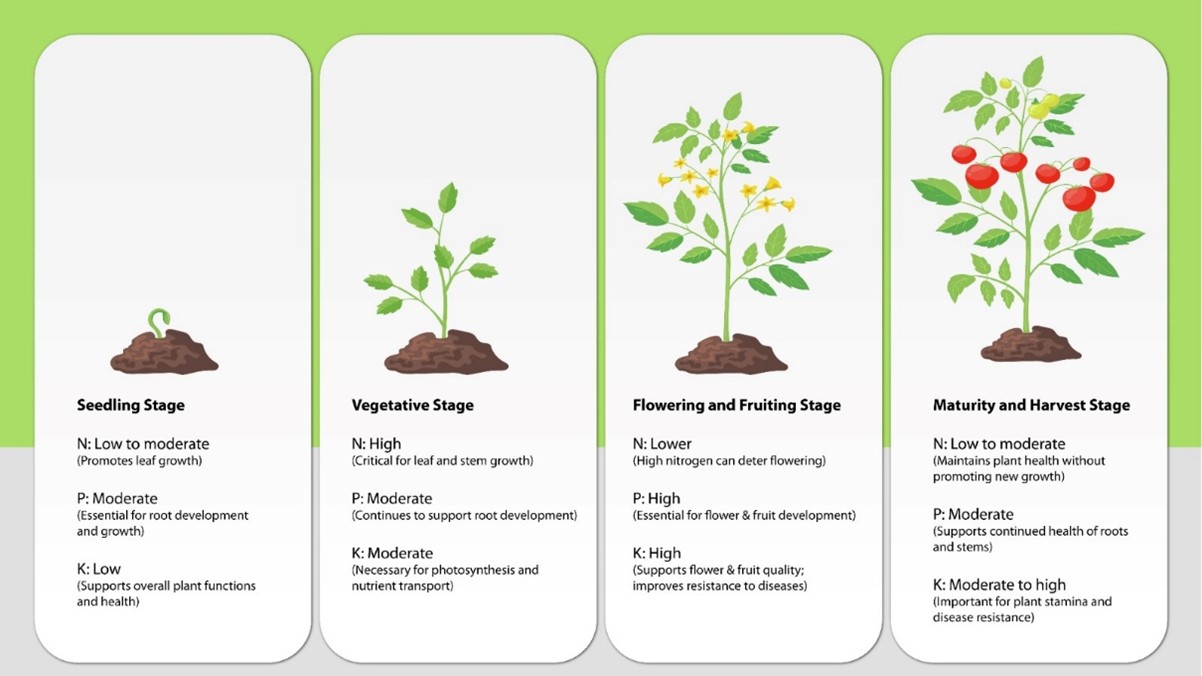
Table of Contents
Introduction
For generations, successful farmers have known that proper soil nutrition is the foundation of abundant harvests. Today, modern agriculture has distilled this wisdom into a science, with NPK ratios standing as one of the most critical concepts every farmer should master.
Whether you're managing vast acreage or tending to smaller plots, understanding the science behind NPK ratios can dramatically improve your crop yields, reduce unnecessary expenses, and promote sustainable farming practices that preserve your soil for future generations.
Understanding NPK: The Building Blocks
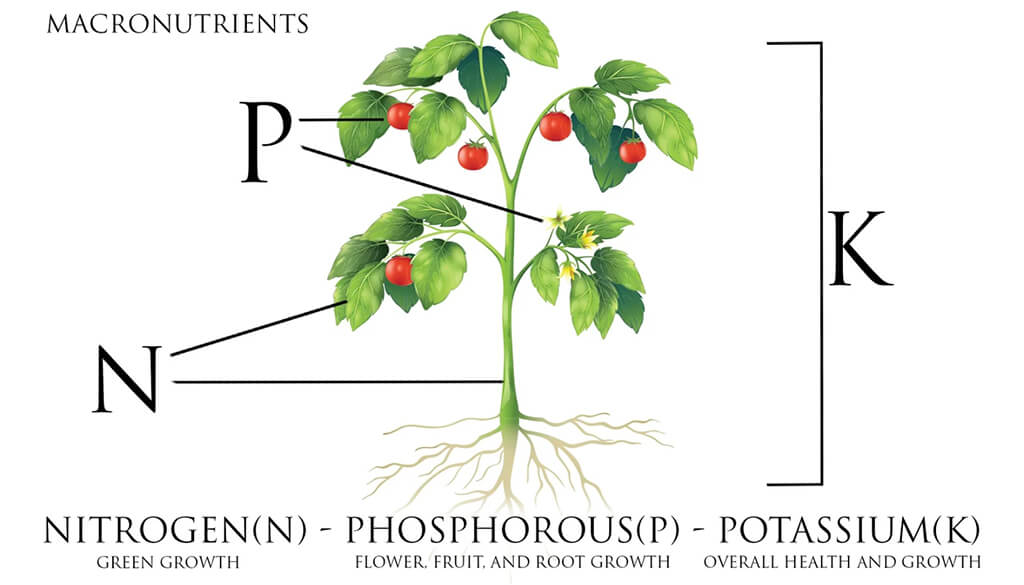
NPK represents the three primary macronutrients essential for plant growth:
Nitrogen (N)
Nitrogen is the engine behind vegetative growth. It forms the backbone of:
- Amino acids, proteins, and enzymes
- Chlorophyll production for photosynthesis
- Cell division and plant tissue development
Without sufficient nitrogen, plants develop yellowing leaves (chlorosis), starting with older growth, and exhibit stunted development with poor stem strength.
Phosphorus (P)
Phosphorus serves as the energy currency in plants, driving these critical functions:
- Root development and early establishment
- Flowering, seed formation, and fruit development
- Energy transfer through ATP (adenosine triphosphate)
- DNA and RNA structure
Phosphorus deficiency often manifests as purplish discoloration on leaf undersides, stunted growth, and delayed maturity.
Potassium (K)
Potassium acts as the regulator and quality enhancer:
- Activates enzymes necessary for photosynthesis and respiration
- Regulates water movement through stomata
- Strengthens cell walls, improving disease resistance
- Enhances fruit quality and stress tolerance
Plants lacking potassium show scorched leaf margins, weak stems, and increased susceptibility to drought and disease.
Decoding Fertilizer Labels
When you pick up a fertilizer bag and see numbers like "10-10-10" or "20-5-10," you're looking at the NPK ratio expressed as percentages by weight. Here's how to interpret them:
- First number (N): Percentage of nitrogen by weight
- Second number (P): Percentage of phosphate (P₂O₅) by weight
- Third number (K): Percentage of potash (K₂O) by weight
For example, in a 50-pound bag of 10-10-10 fertilizer:
- 5 pounds (10%) is nitrogen
- 5 pounds (10%) is phosphate
- 5 pounds (10%) is potash
- The remaining 35 pounds are filler materials and secondary/micronutrients
Understanding these numbers allows you to select the appropriate fertilizer for specific crop needs and growth stages.
NPK Requirements for Different Crops
Different crops have varying nutrient needs based on their growth habits and developmental stages:
Grains and Cereals
- Corn: High nitrogen demand (100-150 kg/ha), especially during vegetative growth. Common recommendation: 20-10-10 or higher nitrogen ratios during early growth.
- Wheat: Moderate nitrogen (80-120 kg/ha), needs sufficient phosphorus for tillering. NPK 15-15-15 works well for balanced development.
- Rice: Requires significant nitrogen and potassium. NPK 15-15-15 or 16-16-8 depending on soil conditions and rice variety.
Vegetables
- Leafy Greens (lettuce, spinach): High nitrogen needs, benefit from ratios like 10-5-5 or higher nitrogen formulations.
- Root Vegetables (carrots, potatoes): Moderate nitrogen, higher phosphorus and potassium. NPK 5-10-10 is often ideal.
- Fruiting Vegetables (tomatoes, peppers): Initially need nitrogen for vegetative growth, then higher phosphorus and potassium during flowering and fruiting. Starting with 10-10-10 and transitioning to 5-10-15.
Fruits and Orchards
- Tree Fruits: Require balanced nutrition with higher potassium during fruit development. NPK 10-10-10 for young trees, shifting to 10-15-20 for mature, fruiting trees.
- Berries: Benefit from higher phosphorus and potassium. NPK 10-20-20 or similar ratios support strong fruit production.
Growth Stage Considerations
The optimal NPK ratio changes throughout a plant's life cycle:
- Seedling Stage: Moderate nitrogen, higher phosphorus (e.g., 10-20-10)
- Vegetative Growth: Higher nitrogen (e.g., 20-10-10)
- Flowering/Fruiting Stage: Lower nitrogen, higher phosphorus and potassium (e.g., 5-15-30)
- Maturity Stage: Balanced to slightly higher potassium (e.g., 10-10-15)
Identifying Nutrient Deficiencies
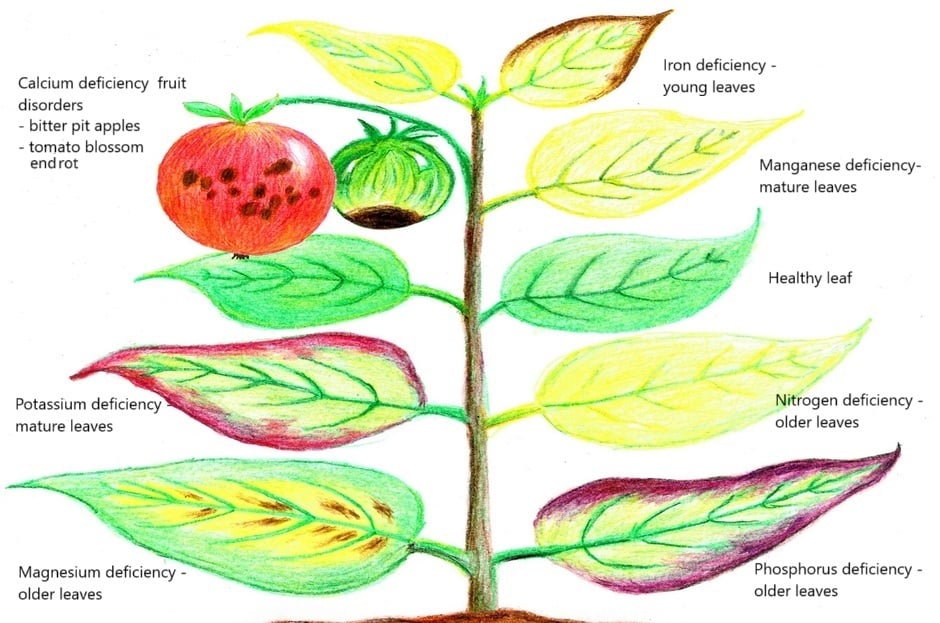
Early detection of nutrient deficiencies allows for timely intervention. Here's how to recognize the visual symptoms:
Nitrogen Deficiency
- Yellowing (chlorosis) starting from older/lower leaves
- Stunted growth with thin, spindly stems
- Smaller leaves and premature leaf drop
- Early maturation and reduced yields
Phosphorus Deficiency
- Dark green leaves with purplish tints, especially on undersides
- Stunted root systems and poor establishment
- Delayed flowering and reduced seed production
- Smaller fruit or grain size
Potassium Deficiency
- Scorched appearance on leaf margins (leaf edge burn)
- Interveinal chlorosis creating a "Christmas light" pattern
- Weak stems prone to lodging
- Increased susceptibility to drought and disease
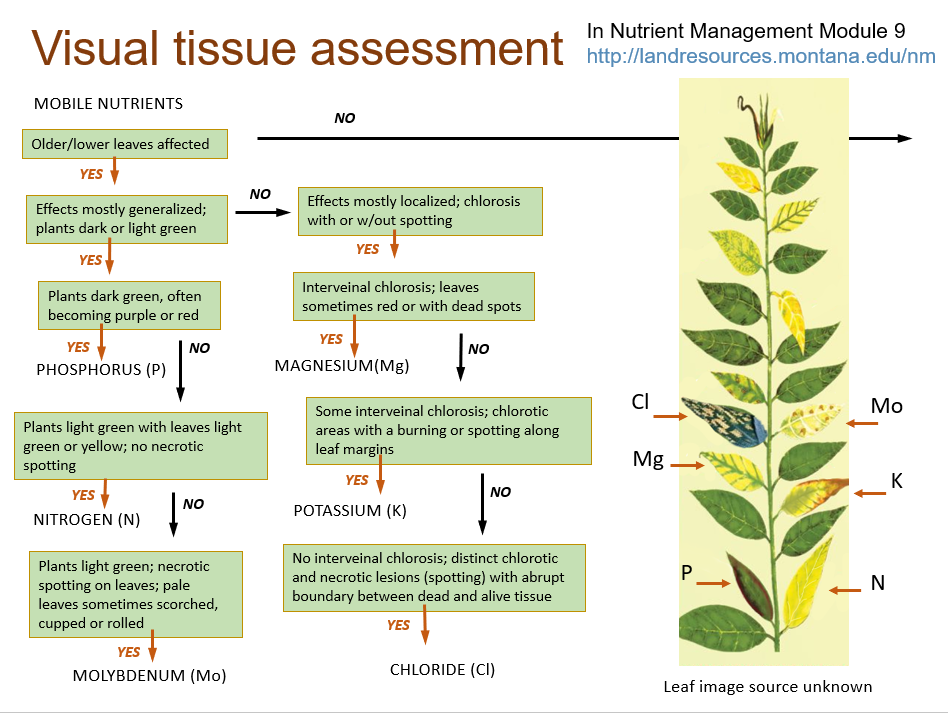
To diagnose nutrient issues accurately:
- Examine which leaves show symptoms first (older vs. newer)
- Note the pattern of discoloration (entire leaf, margins, veins)
- Consider recent weather conditions and irrigation practices
- Conduct soil tests to confirm suspected deficiencies
Sustainable NPK Management
Modern agriculture faces the dual challenge of increasing production while minimizing environmental impact. Sustainable NPK management involves:
Soil Testing and Analysis
Regular soil testing provides critical information about:
- Current nutrient levels and imbalances
- Soil pH affecting nutrient availability
- Organic matter content and soil structure
- Recommendations for precise fertilizer application
Invest in comprehensive soil tests every 2-3 years and adjust your fertilization strategy accordingly.
Organic Alternatives
Organic fertilizers provide NPK plus additional benefits:
- Compost: Typically 1-1-1 NPK with micronutrients and beneficial microbes
- Animal Manures: Variable NPK (chicken manure: 1.5-1-0.5; cow manure: 0.5-0.3-0.5)
- Cover Crops: Legumes fix nitrogen; deep-rooted plants bring up phosphorus
- Green Manures: Add organic matter and nutrients when incorporated
Environmental Considerations
Improper fertilizer use can lead to:
- Nutrient runoff causing water pollution and algal blooms
- Nitrous oxide emissions contributing to greenhouse gases
- Soil acidification requiring lime applications
- Reduced soil biological activity
Sustainable practices include:
- Split applications timed to crop needs
- Buffer strips near water bodies
- Precision application technologies
- Integrated nutrient management plans
Technology and Precision Agriculture
Advancements in agricultural technology are revolutionizing NPK management:
Soil Sensors and Testing Innovations
- Portable soil nutrient sensors providing real-time data
- Spectroscopic tools for rapid field analysis
- Digital mapping of soil fertility variations
Variable Rate Application
- GPS-guided equipment applying precise nutrient amounts
- Zone management based on yield history and soil types
- Prescription maps integrating multiple data layers
Monitoring and Decision Support
- Satellite and drone imagery identifying nutrient stress
- Plant tissue analysis guiding in-season corrections
- Decision support systems integrating weather data with nutrient models
These technologies allow for site-specific management that maximizes efficiency while reducing environmental impact.
Conclusion
Mastering NPK ratios is not merely about applying fertilizers—it's about understanding the complex relationship between soil, plants, and nutrients to create optimized growing conditions. By interpreting fertilizer labels correctly, recognizing plant needs at different growth stages, identifying deficiency symptoms early, and embracing sustainable practices, farmers can achieve both productivity and environmental stewardship.
As climate conditions become more variable and resource efficiency more crucial, this scientific understanding of plant nutrition will only grow in importance. Remember that soil health is the foundation of sustainable agriculture, and balanced NPK management is a cornerstone of that foundation.